The Most Common Reasons People File for Bankruptcy

With the recent downturn in the economy, bankruptcy has become an increasingly popular way for people to relieve their debts. There are hundreds of reasons why a person may choose to file bankruptcy, but some reasons are more prominent than others. Here are the four most common reasons people file for bankruptcy in America:

  1. Medical Bills: With the number of uninsured citizens in the United States rising by the day, many families have high medical debt for accidents they could not pay for on their own. Medical bills can be upwards of $100,000 for one person, and that debt is typically more than one person can pay off. Bankruptcy provides patients with the opportunity to relieve their medical debts and start fresh in the future.
  2. Unemployment: Loss of work is another common cause of bankruptcy in the modern world. As people lose the ability to work, they lose the ability to pay their bills. Thus their debt piles up, and bankruptcy becomes the only solution they have to get back on their feet.
  3. Excessive Debt: Some people just make poor financial decisions, and they end up in debt because they over-exceeded their financial limitations. This is often the case with young adults who are not used to living on their own. Credit card debts and high car loans are some of the biggest financial problems in America, and they are among the most significant causes for bankruptcy.
  4. Divorce: Divorcees often encounter debt that was once part of a marriage. This, combined with the cost of divorce as a whole, may cause someone to build up enough debt to qualify for bankruptcy.

There are plenty of other reasons why you may feel pressed to file bankruptcy, but those are the most common ones at this time. If you happen to fit into one of those categories, you might want to speak with a debt relief attorney to assess your options.

Can I Keep My House If I File Bankruptcy?

One of the most common questions we hear from our customers who are considering filing for bankruptcy is;

 If I file for bankruptcy can I keep my house?

Unfortunately, it isn’t a simple yes or no. The short answer is sometimes.

Here we will look at the factors that determine whether or not your house can and should be saved.

Chapter 7 Bankruptcy:

When filing Chapter 7, the debtor may or may not be able to keep their house. This liquidates all of your assets to pay your creditors. Your home is included by federal law.

The catch is that most states have their own form of “homestead law” that protects a portion of the equity of a debtor’s home from the bankruptcy process.

If a debtor has less equity than is protected by his state law, they should be able to keep their home as long as they keep making payments. Your home’s equity exemption is determined by the homestead laws of which state you reside.

Chapter 13 Bankruptcy:

When filing Chapter 13, the debtor can generally keep their house as long as they continue to make the mortgage payment.  If your equity in your home exceeds the amount protected by your local homestead laws, then Chapter 13 may be for you.

You might be able to stretch every dollar to make that mortgage payment, but should you? For instance, if you owe creditor’s more than your home is currently worth, your bankruptcy filing might be a good time to cut your losses and walk away.

Do I Want To Keep My House When I File for Bankruptcy?

There are other considerations which also determine your practical ability to keep your home. Are you caught up on payments? How much non-exempt equity do you actually have?  When making the decision whether to try and keep your home or let it go you will want to speak to an attorney in your area who is knowledgeable about local bankruptcy laws.

At the end of the day, it is all a question of whether your house represents an asset or a financial hardship.

When Bankruptcy Won’t Work

Bankruptcy is considered the ultimate relief of financial burdens, but that does not mean that it is right for everyone. In some cases, even bankruptcy may not be able to help you out of your debts. Before you rely on this procedure to remove the pressure from your shoulders, you need to assess your life after bankruptcy. Do you think you could make it then? If not, going bankrupt may be a poor choice

You are usually allowed to keep your vehicle, home, and some other property when you file for bankruptcy, which means that you may still have loans to carry after the process is complete. If your income has been reduced to the point that you can no longer afford to pay for the home you live in and the car you drive, you need to first settle your finances before you can use bankruptcy for assistance. This means that you may have to give back your home, car, or both to get into something you can afford. You can then use the bankruptcy to wipe away any excess money owed to your former lending institutions.

Be realistic about your financial prospects so you do not end up in the same situation later on. After a successful Chapter 7 you will not be able to file Chapter 7 again for another eight years, and you certainly won’t be able to rebuild your credit if you have excessive loans to pay after the process. Rather than getting into that kind of bind, you need to figure out if bankruptcy is right for you at this point in time.

As you know by now, bankruptcy is not an option for everyone. Instead of jumping into this process with the hope of making your life better, you should assess the situation you will be in afterward. If your bills do not fit your current income, no bankruptcy specialist is going to be able to help you out.

Rebuilding Credit After Bankruptcy

People ask me a lot of questions.  A  very common question is “how can I rebuild my credit after bankruptcy?”  Another variation of the question is “how long will it take to rebuild my credit after bankruptcy?”  For most of the people who are calling me, I think that is the wrong question.  Hidden beneath the “how can I rebuild my credit” question is another question which I am afraid is the real question:  “How soon can I get back in debt?”

Once the bankruptcy is completed, most of my clients are really out of debt – or at least nearly out of debt.  That can feel pretty strange for somebody who is not used to it.  It can feel uncomfortable, just not normal, not OK.  There can be a tendency to want to get back into debt as soon as possible, because being debt free is just too strange. Let me suggest this is not the time to be thinking about more credit.  This is the time to focus on staying debt free and actually enjoying being debt free. Being debt free will start to feel really good if you allow yourself some time to let it start feeling normal.

The better question would be “where can I learn some money management methods and principles?” I make no claim of being a money management expert.  If you want such an expert, I have been recommending Lutheran Social Services and/or Family Means for years.  Having said that, however, let me share a few money management ideas that I believe actually work:

  • Never let somebody else handle your check book or checking account.  Always take care of it yourself.  Otherwise you’ll never know what’s going on.
  • Minimize automatic withdrawals – they make it harder for a person to be aware of where the money is going.
  • Sit down and spend some time with your bills.  Touch them, smell them – I’m serious.  Accept that they are real and they are yours.
  • Pay each bill manually or as manually as technology these days permits.  Avoid everything and anything that helps you forget that the bill is there.
  • Avoid credit cards whenever possible.  In the situations where you must have one, use a debit card or a prepaid card.
  • Do whatever it takes to completely rid yourself of the idea that somebody or something is going to come along and bail you out.  No matter what the politicians, your friends, your relatives (especially parents) say, there are no free gifts.  No free bailouts.  No free money of any kind.  It all has a price of some kind that you will have to pay sooner or later.

Everything I’ve ever read about money management says you should do a written budget.  Personally, I’m not sure that’s such a great idea.  Diets don’t work for people who need to lose weight, and I think a budget is a lot like a diet.  Best to take it day by day, being mindful every day of where your money is coming from and where it is going to.  I don’t think it is at all a matter of needing to put yourself on something like a diet.  I think it’s mostly a matter of needing to really just start paying attention.

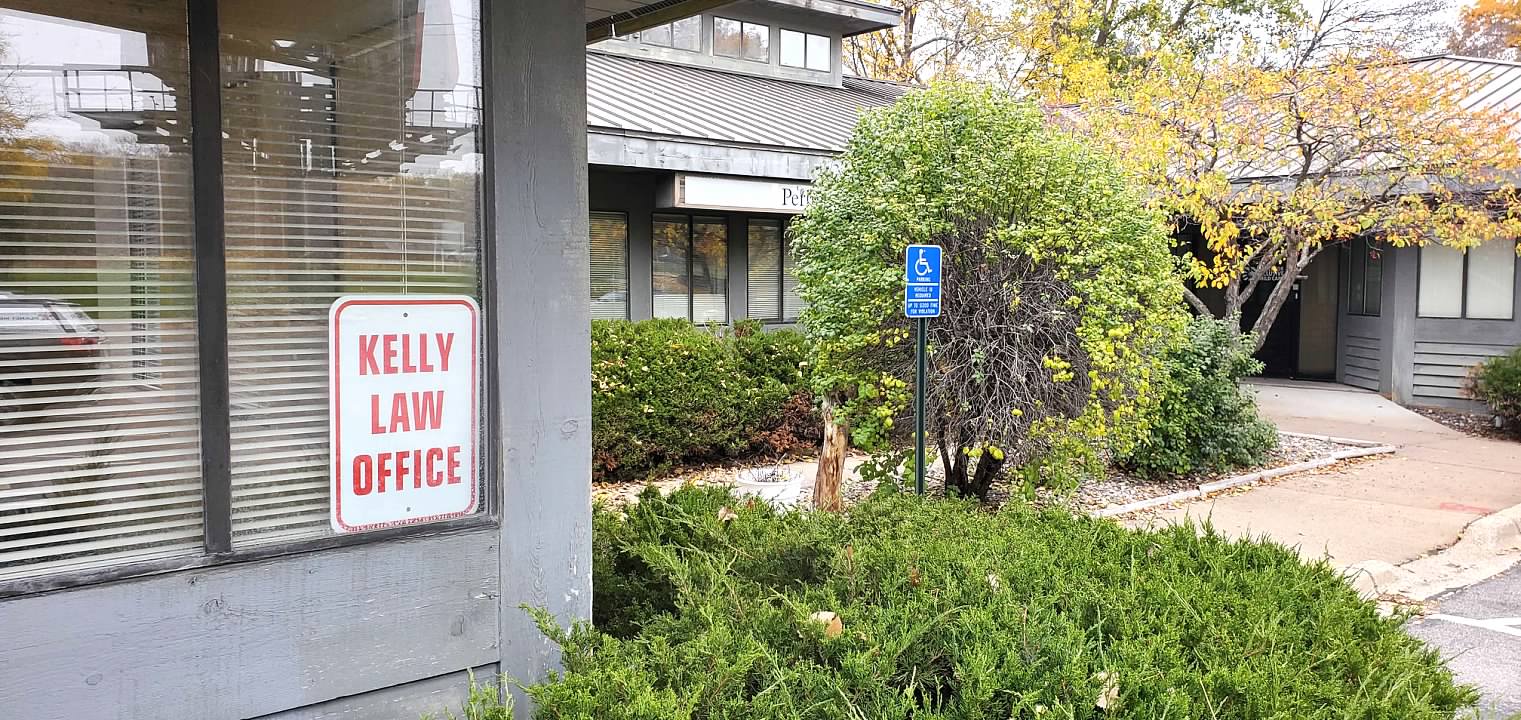
This article is for general information purposes only and is not intended to be legal advice. Kelly Law Office is a debt relief agency helping people file for relief under the federal bankruptcy code.

How Does Bankruptcy Work

Filing for bankruptcy is often seen as an irreversible act that is only to be reserved for dire and desperate circumstances. For many, the very thought of filing brings to mind images of long shameful court battles and loss of wealth, reputation, and good credit standing.

In truth this undesirable image is largely exaggerated and undeserved. What many people don’t realize is that filing for bankruptcy protection is often the first step in climbing out of the dark hole of debt and into the light of financial recovery.

Oh No! Not the “B” Word

Much of the mystery and taboo associated with the subject comes from a general lack of understanding about how bankruptcy works and what it means for the person who is filing. Here we hope to dispel some of the myths and misinformation that surrounds the subject by offering you a brief look into how bankruptcy works.

In the U.S., bankruptcy is constitutionally required to be placed under federal jurisdiction. Thus congress has enacted a number of statutes governing bankruptcy law and proceedings. Likewise, bankruptcy cases must be filed in United States Bankruptcy Court. Although cases are filed under federal jurisdiction, state laws greatly affect certain aspects of the process so it is important to understand that bankruptcy laws vary significantly from state to state.

Six Shades of Debt Relief

Bankruptcy is a blanket term that refers to a variety of legal arrangements that are available to a debtor seeking to liquidate, restructure or resolve his debt. Under Title 11 of U.S. Bankruptcy Code there are six distinct chapters or types of bankruptcy available to debtors depending on who they are and their financial situation.

All attorney David Kelly handles, however, are Chapter 7s and Chapter 13s, so discussion here will be limited to those two kinds of bankruptcy.  We we will focus on the those two types of bankruptcy available to most individuals who have fallen on hard times and are seeking relief from creditors. We will take a look at each process and how each type of bankruptcy works.

How Does Chapter 7 Bankruptcy Work?

Chapter 7: Basic Liquidation

As the name suggests, Chapter 7 is sometimes decribed as the basic liquidation is the sale of the debtor’s non-exempt property and the distribution of the proceeds to creditors. One might think that Chapter 7 is generally the “harshest” form of bankruptcy as it can involve the mandatory sale of ones assets and generally does not involve structured reorganization of debt or a payment plan.

In most states bankruptcy proceedings are handled by a U.S. Trustee operating under the authority of the department of justice. In most Chapter 7 proceedings the process starts with the debtor filing a petition with the bankruptcy court that serves the area where the debtor lives, does business or houses their principal assets.

Along with the petition, the debtor must also submit a collection of documents that provide a detailed account of the debtor’s financial situation.  This includes but is not limited to income, assets, living expenses and debt obligations.

Exempt Property:

Please know that most of the Chapter 7 clients at Kelly Law Office don’t have any assets liquidated at all.  Most if not all of their assets can be claimed as exempt, so that they may keep them.  For assets which are not exempt, the Trustee may allow the Debtor to buy the asset back by paying it’s value rather than surrendering the item itself.

Among the documents filed is a schedule of the debtor’s exempt property. This allows the debtor to retain all property that falls under federal and state protection from the liquidation process. It is important for a person filing for bankruptcy to consult with an attorney to determine which of his assets are exempt from the process.

Stop Collection:

Filing for Chapter 7 stops collection actions against the debtor. As soon as the debtor files for bankruptcy the assigned clerk gives notice to creditors and collection agents listed in the filing to stop all lawsuits and collection efforts against him.

Conclusion:

While the process can involve all eligible assets being repossessed and sold in an effort to satisfy all or a portion of the debtor’s outstanding debts, it is unusual for our clients to lose any assets at all. If any assets are lost, it is usually relatively minimal.  Once the case is completed, most remaining debt is discharged and, with certain exceptions such as student loans, the Debtor no longer owes anything to the creditors listed in the filing.

Side Effects:

Filing for Chapter 7 Bankruptcy has several effects on the debtor in addition to the obvious outcome of debt relief. The filing is recorded on the debtor’s credit history and also affects their ability to file bankruptcy again using the same or other chapter filings.

Chapter 13: Individual Debt Adjustment (Personal)

Chapter 13 Bankruptcy is somewhat similar to Chapter 11 in that the debtor is working to formally or legally restructure and adjust their debt burden in a way that allows them to move forward without the constant hardship of collection activity.

Stop Collection:

Filing for Chapter 13 stops most collection actions against the debtor. As with Chapter 7 filings, the stay or stop in collection activity may only be temporary if one of the creditors is able to get an order lifting the stay with regard to the particular debt owing to that creditor. As soon as the debtor files for bankruptcy the assigned clerk gives notice to creditors and collection agents listed in the filing to stop all lawsuits and collection efforts against him.

Save Your Home

One notable advantage of Chapter 13 filings is that the Debtor may be able to use the Chapter 13 payment plan as a tool to get mortgage payments caught up.  This can obviously help avoid foreclosure of his home. With a Chapter 7 filing, foreclosure may be delayed, but the Debtor is on his or her own to get the payments brought up to date.  While bringing payments up to date in Chapter 13, the Debtor must also start and continue making the regular payments on the mortgage which come due after the case is filed.  Many succeed at this, but often it is very difficult..

Conclusion

A Chapter 13 Bankruptcy may be preferable to a Chapter 7 for the debtor who wishes to get caught up on a mortgage which is behind.  Income taxes which are behind can also be brought up to date in a similar manner under Chapter 13.  The payment plan is not based on the amount of the debt but upon what the Debtors can afford to pay.  Debtors are required to devote their entire disposable income – what’s left over after reasonable living expenses – to their Chapter 13 Plan payments.  If the Trustee is satisfied that a good faith effort is being made, the creditors have little choice but to accept the proposed plan.  Little if any negotiation is involved in most cases.

Summary:  How Bankruptcy Works

Bankruptcy is a legal procedure or device that follows standard guidelines. Here’s how it works:

  1. Debtor or Creditor brings to the attention of the court a debt or group of debts which the debtor has demonstrated he is unable to otherwise pay or resolve.  In Chapters 7 and 13 all debts must be listed.
  2. Debtor (or sometimes the creditor) initiates bankruptcy filing which establishes the chapter under which said bankruptcy is to be carried out.
  3. Debtor is required to furnish a significant body of evidence detailing his financial standing and inability to pay the debts in question.
  4. Creditors are given the opportunity to review the evidence and have the opportunity to file certain objections if they believe that the Debtors do not qualify for the relief they are requesting.
  5. If all goes well, the Debtors will receive a Discharge after a certain period of time, which is essentially a court order which says all or a substantial part of the debts are gone.

This is a basic guide to how the most common forms of bankruptcy work. For more information we recommend you contact an attorney to determine your best course of action given your particular set of circumstances. Bankruptcy law varies greatly from state to state and circumstance to circumstance. We want to make sure you have the tools and knowledge to address your unique set of circumstances as best as possible. It is strongly suggested that you call attorney David Kelly for a no-cost screening over the phone (952-544-6367).
Can Bankruptcy Stop Foreclosure?

Foreclosures continue to occur at an alarming rate in many parts of the country. Many homeowners who obtained subprime mortgages earlier in the past decade or who now find themselves unemployed or underemployed because of the depressed economy are unable or unwilling to make their monthly mortgage payments

State and federal programs for distressed homeowners to assist in loan modifications are available to some but you may not qualify. For others, a short sale transaction is a way to extricate themselves from a home whose value is less than the loan amount, but these can be complicated and may not work for any number of reasons.

As a result, many people facing overwhelming financial pressures turn to bankruptcy as a solution, but can a bankruptcy stop foreclosure?

The Foreclosure Process

Once you miss at least 3-4 consecutive mortgage payments and the lender has sent you notices warning you of possible foreclosure, the lender will generally begin the process to repossess your home. This can take several months and in some instances more than one year.

Minnesota is a non-judicial foreclosure state, meaning that there is usually no court action. When the foreclosure is done without court action, it is called a “foreclosure by advertisement.” Mortgages typically have a power of sale clause allowing an attorney to foreclose on your home. A lender may choose, however, to go to court in a judicial foreclosure to obtain a judgment of foreclosure.

If your home is taken, there are certain reporting and notice requirements before the lender can sell it at an auction conducted by the sheriff, usually at a greatly reduced price. In Minnesota, as long as it’s a foreclosure by advertisement, you are not subject to a deficiency judgment if the sale is for less than the loan amount.  This means that most of the time, as long as there is only one mortgage, a homeowner in Minnesota can walk away from a house free and clear.  If  there is a second mortgage, however, watch out.  These days the holders of second mortgages are suing people in large numbers after the first mortgage has foreclosed.  Sometimes they don’t even wait for the first mortgage to foreclose if the payments are not up to date.

Accordingly, if you are facing foreclosure, can a bankruptcy stop the foreclosure or benefit you in some way?

Can a Chapter 7 Bankruptcy Stop a Foreclosure?

Whenever you file for bankruptcy protection under a Chapter 7, an automatic stay of all legal proceedings, including foreclosures, goes into immediate effect. A Chapter 7, if you qualify, allows you to discharge most if not all of your debt.

Unfortunately, the lender is allowed to file a motion to lift the automatic stay as it pertains to your property as the lender can otherwise suffer economic harm. In this instance, a Chapter 7 will only temporarily delay the foreclosure.

It is very difficult to fight the motion to lift the automatic stay.  About the only practical way to stop the motion is to get the payments up to date or make arrangements to bring the payments up to date.  In a Chapter 7 the automatic stay ends when the discharge is granted, usually around three months after the case is filed.  This means that most of the time lifting the stay doesn’t mean much anyway, because the stay was going away by itself.

At the least, you may be able to save thousands of dollars while not making any mortgage payments and take the time to look for alternative housing.  Once the foreclosure is stopped, many lenders are very slow to get it started again.  While the automatic stay officially only stops things for about three months, you will very likely gain much more time than that.

Can a Chapter 13 Bankruptcy Stop a Foreclosure?

The other bankruptcy filing available to a homeowner is Chapter 13. Under this plan, you must submit a repayment plan that includes all your creditors and that is approved by the bankruptcy trustee. The automatic stay also goes into immediate effect once you file.

Unlike a Chapter 7, this chapter allows you to keep your home but you must have proof of sufficient income to not only maintain the current mortgage payments but to make up the arrearages over the life of the repayment plan. Many repayment plans are for the maximum 60 months. Under a Chapter 13, then, you may be able to stop the foreclosure so long as the indicated conditions are met.

In a Chapter 13 it might also be possible to do a lien strip.  We’ll know for sure when the Eighth Circuit Court of appeals finally decides the Fisette case.  A lien strip would benefit homeowners with multiple mortgages. It would eliminate payments on all mortgages except the first one. If your home’s value has declined and the first mortgage has secured all the home’s equity, if any, then the other mortgages  would be considered unsecured debt and will be discharged.

In any case involving a foreclosure, consult with an attorney to explore all your legal options.

close
Facebook IconYouTube IconTwitter Icon